Flowing Air: A Techno Font That Breathes Life Into Modern Design
There's a moment in every creative project when the typography either clicks into place or feels like an afterthought. You've seen it happen—a striking poster with generic lettering that falls flat, or a bold logo undermined by a font that doesn't match its energy. Flowing Air steps into that gap as a techno various display font designed for projects that demand presence without sacrificing personality. It's the kind of typeface that makes you pause mid-scroll, whether it's anchoring a music festival poster, defining a tech startup's brand identity, or giving a YouTube channel header that unmistakable edge.
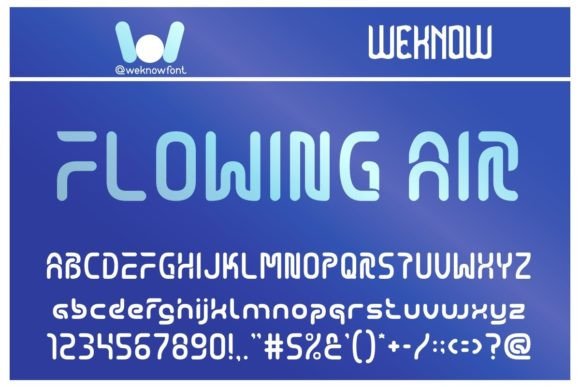
What sets Flowing Air apart isn't just its visual appeal—it's the deliberate fusion of futuristic geometry and fluid motion. The letterforms carry a sense of movement, as if each character is caught mid-glide. Sharp angles meet subtle curves, creating a rhythm that feels both mechanical and organic. This duality makes it remarkably versatile. It can read as cutting-edge for a gaming studio, sophisticated for a corporate identity, or rebellious for an underground music label. The font doesn't scream for attention; it commands it through confident design choices that reward closer inspection.
Where Flowing Air Finds Its Voice
Think about the brands and projects that stick in your memory. They often share one trait: typography that feels intentional. Flowing Air excels in contexts where you need to make an immediate visual statement without relying on ornamentation or gimmicks. Consider a logo for a cybersecurity firm—the font's clean, angular structure communicates precision and forward-thinking innovation. Now imagine that same typeface on merchandise for an electronic music producer, where its techno aesthetic reinforces the sonic identity fans already connect with.
The font's versatility extends across industries and mediums:
- Apparel and streetwear brands that want typography reflecting urban culture and contemporary design trends
- Movie and game titles where the visual language needs to hint at genre—sci-fi, action, thriller—before a single scene plays
- Magazine covers and editorial layouts targeting audiences who appreciate bold, modern aesthetics
- Social media graphics for Instagram carousels, YouTube thumbnails, and TikTok overlays where grabbing attention in milliseconds matters
- Event posters for music festivals, tech conferences, or art exhibitions that need a cohesive visual identity
- Website headers and hero sections where first impressions shape whether visitors stay or bounce
- Packaging design for products aimed at younger, design-conscious consumers—think specialty beverages, tech accessories, or limited-edition drops
What makes Flowing Air particularly useful for these applications is its balance between distinctiveness and readability. Display fonts often sacrifice legibility for style, becoming decorative elements rather than functional typography. Flowing Air maintains clarity even at larger sizes where every curve and terminal is visible, which matters when your audience needs to read a product name on a shelf or a headline on a billboard from a distance.
Matching Typography to Project Goals
Choosing a font isn't just about what looks good in isolation—it's about what serves the project's purpose. A premium font like Flowing Air gives you a strong starting point, but the real value comes from understanding how to deploy it effectively. Here's what I've learned from working with display typefaces across different creative contexts.
Start with the emotion you want to evoke. Flowing Air carries associations with technology, movement, and modernity. If your project leans toward warmth, tradition, or handcrafted authenticity, this font might work as an accent rather than the primary typeface. But if you're building a brand identity for something forward-looking—a SaaS product, a fitness tech app, a contemporary art gallery—it aligns naturally with those visual expectations.
Test font pairings before committing. Display fonts like Flowing Air work best when paired with a complementary body typeface. A clean sans serif for body text creates breathing room, letting the display font do its job without overwhelming the layout. Try pairing it with neutral options—think geometric sans serifs or even a restrained serif font for editorial projects—to see how the hierarchy feels across different contexts. The goal is contrast that serves readability, not conflict that creates visual noise.
Consider your medium carefully. A font that looks magnificent on a 27-inch monitor might behave differently in print, especially at smaller sizes. Flowing Air's design holds up well across digital and physical applications, but always test in the actual environment where your audience will encounter it. Print a sample. View it on a phone screen. Check how it renders on different browsers. These practical checks prevent surprises after you've already committed to a design direction.
Building Visual Consistency Across Touchpoints
One of the most overlooked aspects of brand identity is typographic consistency. When a business uses five different fonts across its website, social media, packaging, and print materials, the result feels fragmented. Customers might not consciously notice the inconsistency, but they register it as a lack of professionalism or cohesion.
Flowing Air offers a solution for brands that want a distinctive typographic anchor. Because it's a various display font with multiple styles, you can maintain visual unity while introducing subtle variation. Use the boldest weight for headlines, a lighter style for subheadings, and let a complementary sans serif handle body copy. This layered approach creates a typographic system rather than a single-note repetition, keeping designs fresh while reinforcing brand recognition at every touchpoint.
For content creators and marketers, this consistency translates directly into audience engagement. When your Instagram grid, website, email headers, and YouTube thumbnails share a cohesive visual language, followers begin to recognize your content before they even read the text. That kind of instant recognition is invaluable—it's the difference between being scrolled past and being stopped for.
Practical Considerations Before You Commit
Before integrating any commercial font into your workflow, a few practical steps will save you headaches down the road. First, review the complete character set and included styles. Flowing Air comes with various weights and stylistic options, so explore what's available. You might discover alternates or ligatures that perfectly suit a specific project—details that elevate a design from good to memorable.
Second, understand the licensing terms. If you're designing for a client, creating merchandise for sale, or using the font in digital products, make sure the license covers your intended use. Most premium fonts offer clear commercial licensing, but the specifics vary. A font used exclusively on a personal blog has different licensing needs than one embedded in a mobile app distributed to thousands of users. Read the terms, ask questions if anything is unclear, and keep documentation organized.
Finally, don't underestimate the power of restraint. A font as visually striking as Flowing Air doesn't need to be used everywhere at once. Sometimes a single headline in the right place does more work than setting an entire page in display type. Let the typography breathe. Give it space. Trust that a well-chosen word set in a well-designed typeface carries more weight than paragraphs of text fighting for attention.
The best design decisions feel inevitable in hindsight—like there was no other choice that would have worked as well. Flowing Air has that quality for projects that need to communicate energy, innovation, and contemporary style without resorting to trends that will date within a year. Whether you're crafting a brand from scratch, refreshing a visual identity, or designing a one-off poster that needs to stop people in their tracks, it's the kind of creative font asset that earns its place in your toolkit through consistent, versatile performance.