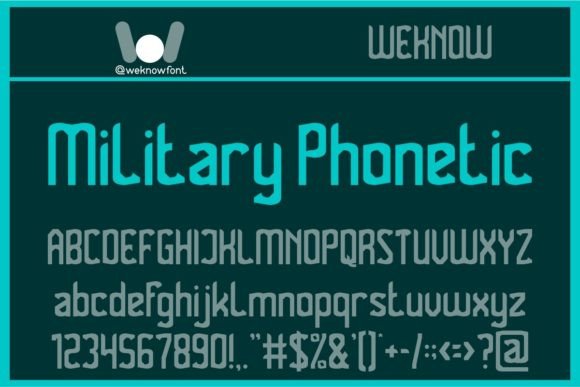
Military Phonetic: The Techno-Sci-Fi Font for Bold, Modern Design
There's a particular kind of visual language that communicates precision, authority, and futuristic edge without saying a word. You've seen it on military-spec packaging, the interfaces of sci-fi films, and the branding of tech startups that want to project strength and innovation. This visual dialect often comes down to one critical element: typography. Finding a typeface that nails this specific blend of technical sharpness and cinematic appeal can be a game-changer for a project. Enter Military Phonetic, a display typeface engineered for exactly these moments. It's not just another font; it's a design tool built to inject a specific, powerful personality into your work.
A Typeface with a Mission: Decoding the Visual Personality
What immediately stands out about Military Phonetic is its unapologetically technical and constructed aesthetic. The letterforms are built with a focus on clarity and geometric precision, reminiscent of stenciled labels on equipment, digital readouts, or the heads-up display (HUD) in a spacecraft cockpit. It carries a modern typography sensibility that feels both strategic and slightly futuristic. The characters often feature squared-off edges, consistent stroke widths, and a modular structure that suggests something engineered rather than organically drawn. This gives it an inherent sense of order and reliability, qualities that are gold when building a brand identity that needs to be taken seriously.
This isn't a font for long paragraphs of body text. Its strength lies in its role as a headline font and logo design powerhouse. Think of it as the typographic equivalent of a high-contrast, angular graphic. It’s designed to grab attention instantly and communicate a core message of strength, precision, and forward-thinking vision. The personality it projects is confident, systematic, and slightly edgy, making it a perfect fit for projects that want to stand out from the softer, more rounded aesthetics that dominate much of the market.
From Brand Marks to Billboards: Where Military Phonetic Excels
The true test of any creative font is its versatility in application. Military Phonetic proves its worth across a surprisingly wide range of creative projects, precisely because its core visual message is so strong and adaptable. For entrepreneurs and designers, this means a single asset can serve multiple purposes, ensuring visual consistency from the business card to the website header.
Let's start with the obvious: logo design and brand identity. A startup in cybersecurity, a tactical gear company, a music producer specializing in electronic beats, or a gaming studio could build an entire visual system around this typeface. Its clean lines ensure it scales down to a social media favicon just as effectively as it scales up to a storefront sign. When paired with a simple sans serif font for body copy, it creates a dynamic and professional font pairing that feels both contemporary and timeless.
Beyond the logo, consider packaging design. A product line of tech accessories, energy drinks, or premium coffee blends could use Military Phonetic on its labels to immediately signal a modern, no-nonsense, and high-performance product. On a poster for a sci-fi movie premiere or a music festival, it sets the tone instantly. For social media graphics, it makes for incredibly impactful titles and quotes that stop the scroll. Use it for Instagram story headers, YouTube video thumbnails, or the title card of a promotional reel. The visual weight it carries requires less supporting design to make an impact, which is a huge advantage in the fast-paced world of digital content.
Practical Wisdom: Using This Display Font Effectively
Choosing a bold display font like this is just the first step. Using it effectively is what separates a good design from a great one. Here’s some practical advice to get the most out of Military Phonetic.
First, context is everything. Match the font's personality to your project's goals. It's a perfect match for a brand that wants to project authority, innovation, or a tactical edge. It might be less suitable for a children's book or a wedding invitation, unless you're going for a very specific, ironic contrast. Always ask: does this typeface reinforce the story I'm trying to tell?
Second, master the art of the font pairing. A display font this strong needs a complementary partner for longer text. Avoid pairing it with another highly stylized font. Instead, let it shine by pairing it with a clean, highly readable sans serif font or even a classic serif font. The contrast will create visual hierarchy and ensure your designs are both striking and legible. A good rule of thumb: if Military Phonetic is the headline, choose a neutral workhorse for the subheads and body text.
Third, never sacrifice readability for style. While it's designed for impact, always test your headlines at the size they'll be viewed. A complex acronym in all caps might look cool at 100 pixels but become an unreadable blur as a small button on a website. Review the full character set of the typeface you license; check for the availability of different weights, numerals, and punctuation that your project will require. Finally, if your project is commercial—and even many personal projects eventually become commercial—ensure you have the correct license. Purchasing a premium font from a reputable foundry or marketplace gives you the legal right to use it in your logo, on your merchandise, and across all your marketing assets without worry.
In the crowded landscape of design assets, Military Phonetic stands out as a purpose-driven typeface. It doesn't try to be everything to everyone. Instead, it offers a specific, powerful voice for projects that need to communicate strength, precision, and a modern, technological edge. By understanding its personality and applying it with thoughtful consideration, you can leverage this font to build stronger brand recognition and create designs that genuinely resonate with your audience.